India’s pharmaceutical industry has long been recognized as the “Pharmacy of the World.” With a strong foundation in generic medicines, vaccine manufacturing, and healthcare exports, the sector is now entering a new phase of transformation. In 2026, the industry is witnessing rapid advancements driven by artificial intelligence (AI), research-led innovation, government initiatives, and expanding global demand.
For pharmaceutical manufacturers, distributors, healthcare professionals, and business partners, understanding these emerging trends is essential to staying competitive in an evolving market.
India’s Pharmaceutical Industry: Entering a New Growth Era
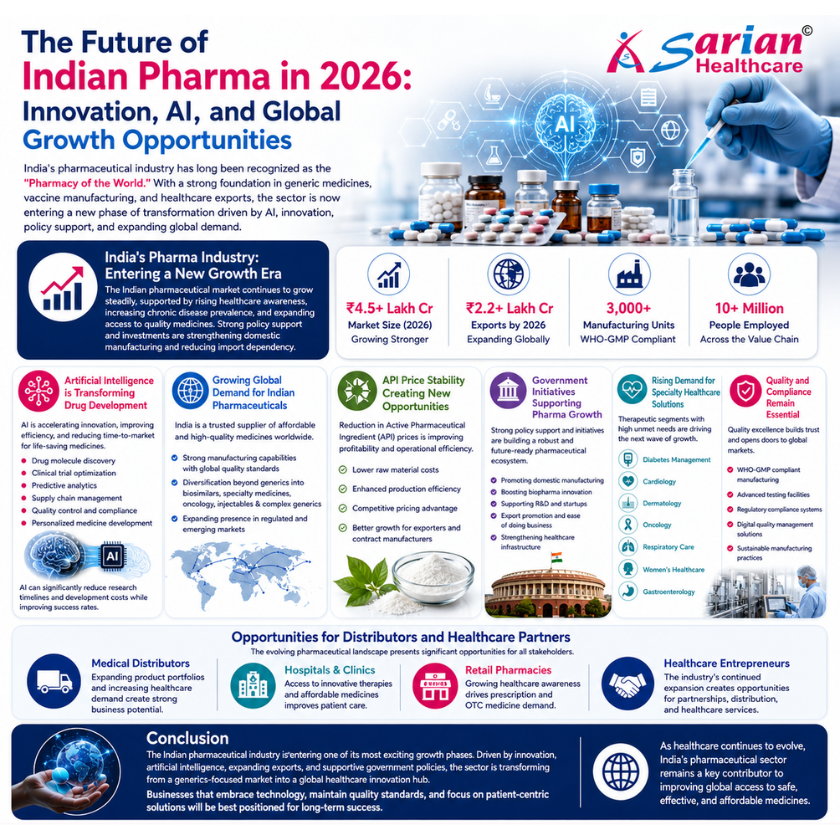
The Indian pharmaceutical market continues to grow steadily, supported by rising healthcare awareness, increasing chronic disease prevalence, and expanding access to quality medicines. The industry is also benefiting from stronger policy support and investments aimed at reducing import dependency and strengthening domestic manufacturing capabilities.
Today, Indian pharmaceutical companies are no longer focused solely on generic medicines. The sector is increasingly investing in specialty drugs, biosimilars, innovative therapies, and global research partnerships.
Artificial Intelligence is Transforming Drug Development
Artificial Intelligence is becoming one of the most influential technologies in modern healthcare. Pharma companies worldwide are using AI to accelerate drug discovery, improve clinical trial efficiency, and optimize manufacturing processes.
Key applications of AI in the pharmaceutical industry include:
- Drug molecule discovery
- Clinical trial optimization
- Predictive analytics
- Supply chain management
- Quality control and compliance
- Personalized medicine development
Industry experts estimate that AI can significantly reduce research timelines and development costs while improving success rates for new medicines.
Growing Global Demand for Indian Pharmaceuticals
India continues to strengthen its position as a trusted supplier of affordable and high-quality medicines across international markets.
Several factors are supporting export growth:
Strong Manufacturing Capabilities
India has thousands of pharmaceutical manufacturing facilities that comply with international quality standards and regulatory requirements.
Diversification Beyond Generics
Indian companies are increasingly focusing on:
- Biosimilars
- Specialty medicines
- Oncology products
- Injectable formulations
- Complex generics
This shift is helping pharmaceutical companies improve margins and build stronger global brands.
API Price Stability Creating New Opportunities
Recent reductions in Active Pharmaceutical Ingredient (API) prices are providing relief to manufacturers and improving operational profitability. Lower raw material costs allow pharmaceutical companies to enhance production efficiency and maintain competitive pricing.
This development is expected to benefit pharmaceutical exporters, contract manufacturers, and healthcare suppliers across the country.
Government Initiatives Supporting Pharma Growth
The Indian government continues to prioritize healthcare and pharmaceutical development through various initiatives focused on:
- Domestic manufacturing
- Biopharma innovation
- Research and development
- Export promotion
- Healthcare infrastructure
Programs designed to strengthen the pharmaceutical ecosystem are creating new opportunities for manufacturers, distributors, and investors.
Rising Demand for Specialty Healthcare Solutions
The healthcare needs of India’s population are evolving rapidly. There is growing demand for therapies related to:
- Diabetes management
- Cardiology
- Dermatology
- Oncology
- Respiratory care
- Women’s healthcare
- Gastroenterology
Pharmaceutical companies that focus on these high-growth therapeutic segments are expected to experience significant market opportunities in the coming years.
Quality and Compliance Remain Essential
As international markets become increasingly regulated, quality assurance remains a top priority.
Successful pharmaceutical companies are investing in:
- WHO-GMP compliant manufacturing
- Advanced testing facilities
- Regulatory compliance systems
- Digital quality management solutions
- Sustainable manufacturing practices
Strong quality standards not only improve patient outcomes but also strengthen long-term business growth.
Opportunities for Distributors and Healthcare Partners
The evolving pharmaceutical landscape presents significant opportunities for:
Medical Distributors
Expanding product portfolios and increasing healthcare demand create strong business potential.
Hospitals and Clinics
Access to innovative therapies and affordable medicines improves patient care.
Retail Pharmacies
Growing healthcare awareness drives prescription and OTC medicine demand.
Healthcare Entrepreneurs
The industry’s continued expansion creates opportunities for partnerships, distribution, and healthcare services.
Conclusion
The Indian pharmaceutical industry is entering one of its most exciting growth phases. Driven by innovation, artificial intelligence, expanding exports, and supportive government policies, the sector is transforming from a generics-focused market into a global healthcare innovation hub.
Businesses that embrace technology, maintain quality standards, and focus on patient-centric solutions will be best positioned for long-term success.
As healthcare continues to evolve, India’s pharmaceutical sector remains a key contributor to improving global access to safe, effective, and affordable medicines.